What is the taxable benefit for private use (bijtelling)?
Benefit-in-kind is a correction to the deductible car expenses for private use of a company car. As a result, your taxable profit increases. It is therefore not the tax amount itself. Value, emissions and date of first registration determine the calculation; your personal tax position determines the ultimate effect.
When does the taxable benefit for private use apply?
Can you prove that you do not drive more than 500 kilometres privately on an annual basis, for example with a comprehensive trip registration, then you do not need to apply an addition. Exactly 500 also falls under this exception. Commuting journeys are considered business-related for income tax purposes. If the car is at your disposal for only part of the year, recalculate the private kilometres to an annual basis. Example: 300 private kilometres in six months is 600 on an annual basis. At 22% and a catalogue value of €30,000, the correction for those six months is €3,300, before the cost cap.
Addition rates
This table applies for a date of first registration in 2026. For older cars, check the applicable year and the 60-month period.
| Type of car | Percentage | Border |
|---|---|---|
| Fuel car | 22 per cent | No limit |
| Emission-free electric car | 18 per cent | Up to and including €30,000; above that, 22% |
| Hydrogen car or qualifying solar car | 18 per cent | Full value |
How long does the reduced rate apply?
The 60 months run from the first day of the month following first registration. After that, the percentage is redetermined. The purchase of a used car does not start a new period. Therefore, check the first registration, not just your purchase date.
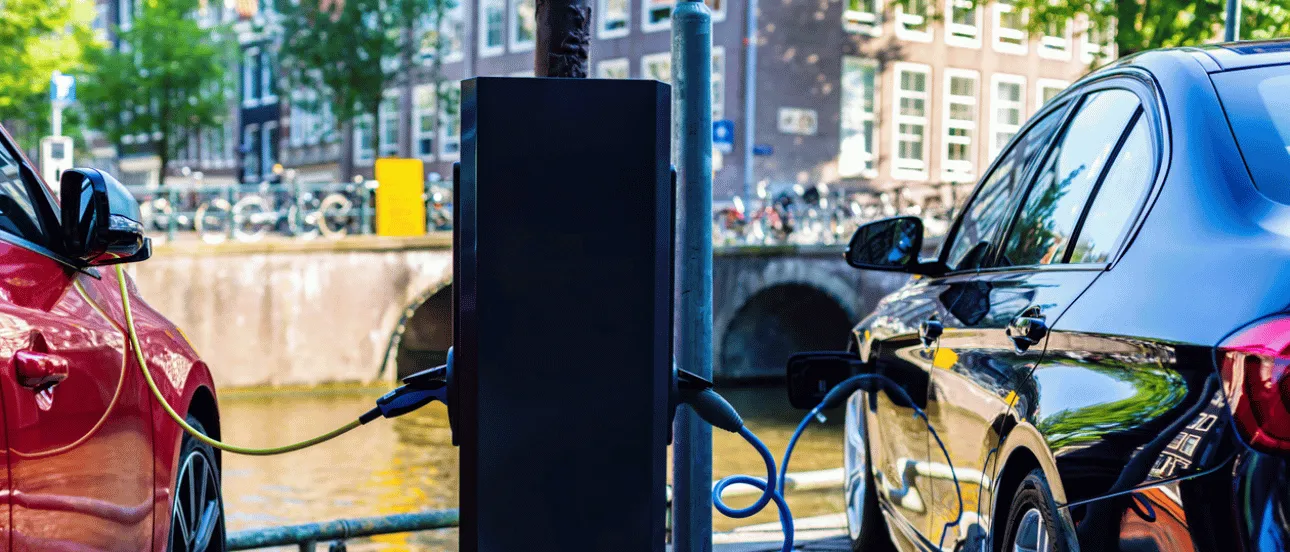
Electric car addition 2026
For a fully electric car first registered in 2026, the 18% rate applies to the first €30,000 of the list price and the 22% rate applies to the amount above that. For hydrogen cars and qualifying solar-powered cars, the 18% rate applies to the entire value. See the benefit-in-kind rules for 2026.
Gross additional taxable income
The formula gives a gross correction, not an extra tax amount. For a business owner, the correction is a maximum of the actual car costs including depreciation. If the formula gives €7,600 and those costs amount to €6,000, the correction is a maximum of €6,000. See the rules for private use of the company car.
In a normal car
Calculating the addition for a fuel car is simple. You multiply the list value by 22 per cent. With a catalogue value of 30,000 euros, the gross additional taxable value comes to 6,600 euros per year. This amount is added to your income and forms the basis for the tax you pay.
Net addition
The final tax difference depends, among other things, on your total income, SME profit exemption, tax credits and Zvw. Compare the complete calculation with and without car correction. A single tax bracket rate multiplied by gross addition is at best a simplified indication.
With an electric car
With first registration in 2026 and a list price of €40,000, the gross annual correction is: 18% × €30,000 + 22% × €10,000 = €7,600. That is €633.33 per month before the cost cap and the final tax effect.
Net addition
A lower gross correction can limit the tax effect. In addition, compare purchase or lease, maintenance, energy, depreciation and insurance; the benefit-in-kind alone does not determine which car is most advantageous.
Additional taxable benefit for youngtimers
In 2026, the 35% correction applies to the open market value for cars older than sixteen years. If you used the car in 2025 and it was older than fifteen years on 31 December 2025, this treatment also applies in 2026. Read the conditions of the youngtimer scheme.
Additional taxable benefit for youngtimer
The market value is determined using valuation guides or an appraisal. You calculate a taxable benefit of 35% of that value. For youngtimers, this addition to taxable profit is therefore often lower than for newer cars.
Example
With a market value of €8,000, the annual addition to taxable profit is €2,800. This is not the tax bill itself. The lower valuation basis can make a youngtimer attractive compared with a car with a high list price.
Preventing addition
You avoid an addition to your taxable income by driving no more than 500 private kilometres on an annual basis. In that case, you do not need to add anything to your income, but you do have to keep a comprehensive mileage log that records every journey. If you use a van exclusively for business purposes, you can submit a declaration of exclusively business use for vans, which means you do not have to keep a mileage log. Private use is then completely prohibited. It is therefore important that you choose in advance which option best suits your usage.
Private car use and VAT
If you, as a self-employed person, use a car for both business and private purposes, you will not only have to deal with an addition to income tax, but also with a VAT correction for private use. This is because different rules apply for VAT: commuting counts as private and, depending on your situation, you have to calculate private use via a kilometre record or a flat-rate correction. Want to know exactly how this works and which method is most favourable for you? Then read our detailed explanation on private car use and VAT.
Other means of transport
Not only cars but also other means of business transport can affect your taxes when you use them privately. As a business owner, it is important to know how the rules work for these vehicles so that you are not faced with tax corrections afterwards.
Additional tax liability for a company motorbike
For a motorbike on business you calculate private use based on private kilometres multiplied by the actual cost per kilometre. You cannot deduct that amount as business expenses.
Additional taxable benefit for a company bicycle
A company bicycle is subject to a fixed addition of seven per cent of the recommended retail price. This amount is added to your income and you pay income tax on this.